mandag 14. mai 2012

Saving Places- I thought I saw


Hopefully we all know what we do to the earth. The enormous consumption of Co2 and other dangerous substances, the pollution, are threatening all the living creatures. In the poem named “Saving places- I thought I saw”, written by the 10 year old girl Hannah Tobin, this message is clear and obvious. By describing the natures beautiful creatures and creations she clearly expresses the consequences of the humans “selfish” actions. But this poem has not only got a good moral, it is also well written.

When I started reading this poem, I thought it was some sort of an ovation to the nature, so how the ending of the first verse turned out really surprised me. Of course I was aware that the poem is called “I thought I saw”, but to be honest I expected a poem about a safari in the wildest of Africa. Because of this, I only became more interested when I read the sentence “It’s probably just the light of dawn”. As the ending of verse number2 had the same “conclusion” as the first one, I could see the connection, and suspected that the rest of the verses had the same negative imprint. I also understood that it could not have been written in a present point of view, in terms of that a fertile plain, a sea, an elephant, a kangaroo and so on, all can be found today.  So, instead of describing what will happen in the future, Hannah Tobin writes as they’re all gone already, died out. This made me get some sort of an insight in how it might be, and there is no doubt that it touched me. There is either no doubt that the poem is well written, consisting of well picked words and adjectives.

Rhythm and rime are characteristics when it comes to poems. Rime is not always necessary, but in this case the poem consists both. Considering that it is written by a 10 year old, I was really impressed. By starting every sentence (as well as the title) with “I thought I saw” she has definitely created a good rhythm. The syllables are fitting as well, and even though the meanings of every ending of the verses are quite the same, they are manifold.  This provides a poem that is not boring to read, because there are not too many repetitions. Another thing worth noticing is all the use of imagery. All of the animals, in addition to the plain and the sea, had a corresponding adjective, like for instance “the proud elephant”. Hannah also described what they are doing, so I even clearer could create pictures in my mind. An example could be the kingfisher, flashing his red- orange chest. The author, Hannah, has also managed to build the story in a way that makes the tension rise. Therefore, the last sentence really stands out, and finishes the poem in a great way. “All these things, they could not be- they all died out because of me”, it says. It made me understand the whole poem better, and it came like some sort of a disclosure, that they all were dead and that it was her ( meaning the humans) fault.

Overall, this is a great poem. It consists of a clear message with a good moral, descriptions that once you read them will turn into pictures in your head, and both rhythm and rime. It also has a certain development, and the last sentence is like a disclosure. If there has to be one thing that could be better, it might be the connection between verse number 1 and the ending. Since a plain and a sea neither are humans nor animals, it would be wrong to say “they all died out”. This is not a great mistake though, and it does not destroy my total impression.

Photo: http://www.whiteelephant.co.za/?welgallerynew&global%5BcategoryISbb_datagallery_categoriesID%5D=25


tirsdag 6. mars 2012

A beautiful dream.

We were given the task to write a text connected to the movie "Mississippi burning" and the segregation in the U.S during the 1960's. In this blog I will pretend to be a girl living at this time, and tell about a terrible as well as a beautiful dream. I'll also reflect on the relationship between the black and white people. I hope you like it...

Dear diary.


I had a dream last night, a beautiful dream. I don't remember a lot of it, but what i remember, I'll never forget.


So in this dream, there was a man. A white man, who slowly walked against me. We were in the town, but noone else was there. It was all empty, exept form me and the man. I remember that i became afraid. I had no idea of what he would do to me. I thought of terrifying stories. Stories about white men that abused black children, and forced them to do everything they were told to.


My legs wanted to run. I wanted to escape, before he stood there, right in front of me. Before it was too late. Then, when I was supposed to turn around, lift my left leg and run as fast as I could, I realized, that I was stuck. As if someone had glued me to the ground. My mouth opened. I wanted to scream, but no sound came out of it. My thoughts were all in a huge kaos. A kaos whitch grew bigger and bigger, making a noise that drowned every other sound. Including the steps of the white man. He'd now started to move faster, and I just stood there. Helpless. Scared that this would become my last day. Scared that I had to die, only 12 years old.


I didn't know that it was a dream. Everything felt so real, even though I could't make a move or a sound. Even though all I could do was waching the man getting closer and closer. I really thought i would die. That he would take a revolver up from his pocket, or maybe a knife, so that he could kill me in the most painful way. Then, instead of this, the most unexpected thing happened.


" I'm not going to hurt you" The white man said, standing only one meter in front of me. He didn't make a move now, he just looked at me. I had finally managed to close my eyes when he said this, and the sentence repeated itself in my mind several times. A warm hand landed on my shoulder. I was still unable to say anything. Not because no words would come out of my mouth, but because I couldn't find them. My mind was empty. Carefully I opened my eyes, meeting the look of the white man. "Don't be afraid", he said, " everything will be fine."


I call this a beautiful dream. When I woke up, I still had a wonderful feeling, until I realized that something like that never would happen in real life. It's weird how we can be such enemies, when we're all humans. It's weird that the one with the lightest skin should be the prettiest. The greatest. The most powerful. I really believe this is weird, but who knows? Maybe this will change once, and that everything will be fine.


I had a dream last night. A beautiful dream, and maybe it once will come true.

torsdag 26. januar 2012

The selfish specie on the top of the rank


The nature is extremely important to us. It gives us everything we really need, but at the same time we are about to destroy it. Not only the woods and the sea, but the animals as well. Can we do something about it? In all the time of our existing, we humans have acted like we rule the world, as if the world was created only for us to live on. Therefore, it’s easy to forget our responsibility in taking care of the trees, the animals and the seas, which we cannot live without. We produce rubbish, hurt animals for fun and cut down a lot of trees to make tons of stupid things we don’t even need. The way people live in industrial countries today is unfair, meaning that we need three earths to accomplish that everyone can live this way. The earth can’t handle our selfishness, and this is what I’d like to focus on in this blog. - By hurting the nature, and everything that belongs to it, we can also hurt ourselves. That is what the deep ecology is all about.

Everyone and everything has a value. You can for instance look at the animals, who have the exact same right as we have to be on earth. They can also feel pain as much as happiness, and if we can try to imagine how they also can suffer, we would not dear to hurt them. Shankara, a philosophe from India, wrote this in the 800th century. I believe he had a really good point. At that time, people hunted animals to survive. They killed animals, and ate everything inside of them. They made use of the fur, as well as the hooves and intestines. They had to kill, because there was no other way to get enough food. Today, everything is different. We hunt, not only to feed ourselves; we also do it for fun. We like to kill. We hunt the animals, shoot them down, and then, when they’re dead, we brag about it. We take a photo and show it to someone else as we say something like “Look at this beautiful creature I just caught!” –Is this fear? Can we call a dead animal beautiful? In my opinion, and I’m sure many people agree with me, they look better when they’re alive. Free, in the nature where they belong.

By recycling the Sunday edition of the New York Times, 75 000 trees could be spared. In the world today, there are a lot of similar cases. It’s unbelievable how easy it is to make an effort.  But on the other side, it’s even easier to think that others will do it for you. That you don’t have to, because there are so many others who recycle, compost their food and reuse things at home. A naive thought, because this is definitely not the reality. We all have the same responsibility, and if one person doesn’t care, he or she will probably not be alone. It is important to live in the moment, but sometimes you also have to think of the consequences of what you do, and what you don’t do.

To drive the car instead of taking the bus can be very tempting and comfortable sometimes. You don’t have to bring money with you, and you don’t need to walk to a station far away from your home. An average family in an industrial country, like for instance Norway, has at least one car. Many of these families use their car(s) mostly to get to and back from work. Even if bus departures are regular, they drive instead, alone in their car with no other passengers. This is waste. If many people could travel by bus (or other public vehicles), the nature would be spared for enormous amounts of Co2. There is also a solution if there is no possibility to go by bus. You can for instance ride your bike to work, that would make you both stronger and spare the environment. Nothing is so bad, that it isn’t good for anything. We humans have learned to take the easiest way out of our problems, but if you really want to achieve something big; you have to work harder for it.

In my opinion, many of us are extremely careless. We don’t have any laws that emphasize the animal’s rights, neither the woods’, waterfalls’ or mountains’ rights. If a human got killed because of its ugliness, everyone would have reacted. If an animal got killed by the same reason, no one would care. We can learn a lot from the deep ecology, hopefully something that will make us think twice before we harm the nature, and every creature in it. As already said, three earths would be needed if everyone should live the way we do in industrial countries. In other words; the humans needs for a comfortable life destroys the nature. We are just the selfish specie on the top of the rank, which we have created.

The Norwegian philosopher Arne Næss, one of the deep ecology founders, once said that that the idea of our standard of living today include a lot that is not needed. We need to accept a lower standard of living, with a quality of life that is as high as or perhaps even higher because we learn to appreciate other values. This might take some time, but it is the way we need to go.


Sources:
Horisonter 10-Gunnar Holth og Kjell Arne Kallevik
Searching 10- Anne- Brit Fenner og Geir Nordal Pedersen


Photo: http://khonjtheeternalsearch.blogspot.com/2011/04/what-future-beholds.html

torsdag 10. november 2011

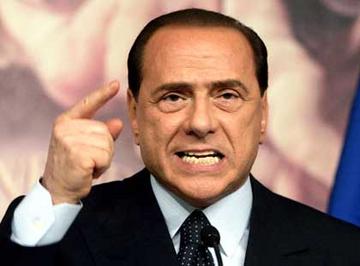
Trekker seg som statsminister

Tirsdag den 8.11 sa den Italienske presidenten Giorgio Napolitano at Statsministeren, Silvio Berlusconi, skulle trekke seg fra sin plass, og ikke stille til nyvalg hvis det blir noe av. Berlusconi bekrefter at han blir sittende til den nye budsjettreformen er vedtatt. Mest sannsynlig vil dette skje i midten av november. Han vil levere sin avskjedssøknad til statsoverhodet, når disse forpliktelsene er gjennomført. I følge den italienske avisa sa Berlusconi til tv- kanalen “Canale 5”at regjeringen ikke lenger har det flertallet som de trodde de hadde. Hans avgang skyldes hovedsaklig en avstemning i nasjonalforsamlingen som viste at han ikke hadde flertallet. 321 parlamentsmedlemmer avsto fra å stemme, og 11 av disse tilhørte Berlusconis eget parti. Etter et intervju han gjorde med BBC News, sier han at han føler seg forrådt av disse 11 medlemmene. Opposisjonsleder Pier Luigi Bersani advarte at han ville fremme et mistillitsforslag dersom Berlusconi ikke trakk seg. Ikke bare har han mistet opposisjonens tillit, men også folket og finansmarkedet har ønsket hans avgang. 

I tillegg har ting gått dårlig økonomisk for Berlusconi, det har gått dårlig med investeringene han har i holdningselskapet Fininvest. Han har av dette tapt en sum på hele 1,36 milliarder norske kroner, og i tillegg 316 millioner kr pga finansselskapet Mediolanum skriver Business. dk.

Etter min mening var det riktig at Berlusconi går av som statsminister. Han tok først statsministerstolen i 1994, og ble dermed gjenvalgt i 2001, og enda en gang i 2008. Etter å ha hatt denne stillingen i så lang tid til sammen kan hvem som helst bli grådig, og Berlusconi har dessuten en enorm formue på over 50 milliarder norske kroner. I med at Italia nå sliter økonomisk og flere er misfornøyde med deres statsminister, er det riktig at han trekker seg.


Kilder:
http://www.dagbladet.no/2011/11/08/nyheter/utenriks/italia/silvio_berlusconi/18944870/

onsdag 28. september 2011

Hva er riktig å gjøre?


Har du noen gang vært i en situasjon, der du må ta et valg og det er vanskelig å ta det riktige? Der du har flere muligheter med både ulemper og fordeler, men vet ikke hvilke som får de beste virkningene og er etisk og moralsk riktige? Tenk deg om. Det er ikke alltid en løsning som vil bli helt perfekt, men det finnes alltid løsninger som er bedre enn andre. I denne oppgaven skal jeg nettopp ta for meg dette med vanskelige valg, sette meg inn i en problemstilling og bruke de etiske modellene til å komme frem til mulige løsninger og min egen mening/ hva jeg ville gjort.

Fra 1969- 1989 var 100 000 mennesker såkalte informanter, eller uoffisielle medarbeidere i Stasi. Deres jobb var å overvåke folk i deres omkrets og rapportere til Stasi om personer som kunne virke truende for regimet. Ikke bare voksne,men også barn og eldre kunne bli angitt, og en rekke informanter kunne angi både venner og familie. 73 % av informantene samarbeidet frivillig med Stasi, 27 % gjorde det for penger, 6 % meldte seg frivillig. 4 % ble medlemmer ved tvang, og samme prosentandel visste ikke engang at det var Stasi de hjalp. De trodde heller det var CIA, eller en fransk etterretning. Informantene hadde en plikt til å sende regelmessige rapporter til Stasi der de ble arkivert. Ikke alle  rapportene var like viktige og derfor, i følge Stasi- forsker Helmut Müller-Enbergs, innførte de et graderingssystem der den beste informasjonen fikk best karakter.

Problemstilling: Du lever i Øst-Tyskland under den kalde krigen. Du har en datter som skal begynne på universitetet. Hun har gode karakterer og alt ligger til rette for at hun skal komme inn på Universitetet i Berlin. Så sier imidlertid Stasi sier at du må bli informant for dem ellers vil ikke din datter få plassen på universitetet.
Mer av oppgaven her


Står du fast i dette problemet, har du hovedsakelig to valg. Du kan velge å takke nei til Stasi, og unngå å bli en av deres informanter. Ser man konsekvens etisk på denne saken vil du spare mange uskyldige eller mistenkte mennesker å bli satt i fengsel og straffet. Tenker du pliktetisk vil dette også være en ganske god løsning, siden du skal behandle andre som du vil behandle deg selv. På den annen side vil ikke din datter ha mange muligheter foran seg pga. hun ikke kom inn på universitetet. At hun ikke får en god nok utdanning kan føre til at hun ikke får jobben hun vil ha, og i verste fall ingen jobb i det hele tatt. Ingen forelder ville ønsket sitt barn en slik framtid, og jeg ville hatt skyldfølelse i lang tid framover.

Den andre løsningen er selvfølgelig å bli med i Stasi som informant og sikre din datter en plass på universitetet. Det vil være det beste for din datter, og du lar hennes utdanning komme først. Denne muligheten er selvfølgelig ikke perfekt den heller. Du kan risikere at folk du angir blir fengslet, noe som er galt pliktetisk. Dette handler også om din stilling i samfunnet. Angir du andre for en handling de er helt uskyldige i, vil det være moralsk feil. Et annet dilemma man kan tenke seg hvis man velger denne valgmuligheten, er at det også kan være vanskelig for datteren din om hun finner ut i ettertid at du har vært informant i Stasi.


Folk har forskjellige meninger. Det er en selvfølge er at alle ikke ville kommet fram til den samme løsningen, selv om situasjonen er den samme. Hadde jeg vært i denne situasjonen ville jeg tenkt på en måte der jeg handlet pliktetisk riktig, og konsentrert meg om konsekvensene av valget jeg tok. Ikke bare min egen datter, men også menneskene jeg kunne angitt til Stasi som i verste fall kunne blitt arrestert. Jeg ville valgt å bli informant i Stasi, men holdt en “lav profil”. Sørget for at informasjonen jeg ga dem ikke var brukbar for Stasi, og datteren min ville i tillegg få plass på universitetet. Om det ville fungert, er jeg ikke sikker på, men hadde jeg vært forsiktig nok er det klart det kunne gått bra. Min samvittighet ville på denne måten vært en smule lettere, selv om det at jeg var en informant for Stasi, ikke ville vært noe jeg var stolt av. For som sagt; når du står i et dilemma der du har flere valgmuligheter finnes det som regel ikke en mulighet som er helt perfekt, men det finnes løsninger som er bedre enn andre.


Kilder:


Bilde:


torsdag 8. september 2011

The Korean War

The korean war was a conflict between the communists and the anti- communists in the 1950's. many soldiers and civilians were killed and more than 15 nations were involved.

At the end of world war two, Korea was shared between the U.S ( South- Korea) and the Soviet Union ( North Korea), and in 1948 governments were established. The republic of Korea in the south, and the communistic norhern part named "The people's democratic republic of Korea."
The relation between these two parts soon became tense, and at the 25th of june 1950, North Korea sent troops into the south. The U.S diden't like this at all and they commanded the north- Korean forces to withdraw.When the situation did not inprove, president Truman made the use of American sea, land and air forces leagal. Hardly a week later the forces of 15 members of the united nations were set under U.S command, and General Douglas McArthur was appointed by the president to lead them.

In the beginning of the war, during the first weeks, North Korean forces had a solid acquiring. They managed to drive both a small part of the American forces and the South Korean Army to the southeast tip of Korea, an area called Busan already by september the 10th. But then, five days later on september the 15th, the U.S forces landed at Incheon, on the west coast. The anti- communist forces recovered and at October the 19th the North Korean capital, Pyongyang was captured. Five days later they almost drove the North Korean forces to the Yalu River. This river symbolized the border against China. At this stage of the war, everything seemed promising for the anti- communist forces, and General McArthur even planned a new offensive, but then something really unexpected happend.The Chinese communists joined the North Korean forces and performed a counterattack. This was a new turningpoint in the war, and in january 1951 the communists regained control by taking over Seoul, the South Korean capital.

Months of fighting went on. General Douglas McArthur wanted another offencive and criticized the U.S policy, which resulted in president Truman replacing him with General Matthew B. Ridgway. When he started at June the 10th, he immediately began to negotiate regarding the cease- fire. His wishes did not come through, and they continued the fights in Korea, although they were not as devastating as earlier.

When Dwight D. Eisenhower became president in 1953, the war was close to an end. The unpopularity of the war had been going on for a while in America and played an important role in Eisenhowers presidential victory. After a lot of discussions he finally succeeded in ending the war at june the 27th, almost exactly 3 years after the beginning of the war. An agreement was signed. The war was over, and in total 2.5 million civilians were killed or wounded, 1550.000 of these came from North Korea.


Sources:
Pictures:

torsdag 1. september 2011

The Vietnam War- Testinlegg

The Vietnam war lasted from 1954- 1975. During these years, more than 3 million people lost their lives, and according to "History. com", more half of them were vietnamese civilians.